Kimo Watanabe
Hawaiian and Pacific Islander culture and visual arts

Malama ‘O Mataitoa, Matanofo, Kimo Watanabe is a cultural practitioner, researcher, and educator dedicated to the preservation and revitalization of Pacific traditions. As the hānai son of Allen Henry Uiha Ai of the storied Lindsey family from the Big Island of Hawai’i. Kimo represents a familial lineage that connects him to prominent, historical chiefly genealogies of Hawai’i island, Maui, and O’ahu and goes back to the storied Maweke from Tahiti. Additionally, he holds Matai Ali’i and Matai Tufuga (Master Practitioner) titles bestowed upon him by the villages of Aua in American Samoa and Sapapali’i in Savai’i Western Samoa.
Kimo’s dedication to this work is deeply personal: he serves the Hawaiian community to honor his late hānai father’s legacy of learning, and he serves the Samoan community to honor his wife and daughters. Driven by a desire to provide his girls, as well as his numerous nieces and nephews with a solid foundation rooted in their heritage, Kimo believes that when we engage in the traditional, physical practices of our ancestors, it can help to build a strong foundation for us to build on.
Blending this profound family accountability with rigorous research, Kimo has collaborated with the Museum’s to help classify Polynesian artifacts and held a fellowship with Harvard University, where he led work associated with the recreation of the first traditional Samoan Ula lei in over 110 years. He has done similar work with Samoan/Fijian Tapua/Tabua, and Hawaiian Lei Niho Palaoa and Lei ‘Opu’u. He has also lent his expertise as a cultural consultant and carver for major film and television productions (including Disney and Apple TV). Through the Living Folk Arts program, Kimo shares these living traditions to inspire a deep respect for ancestral roots, craftsmanship, and community connection.
Offerings to Learners:
Kimo offers highly engaging, hands-on workshops, lecture-demonstrations, and multi-day residencies tailored for K-12 students, universities, and community groups. Each offering is grounded in traditional protocols and can be adapted to fit different age groups and timeframes:
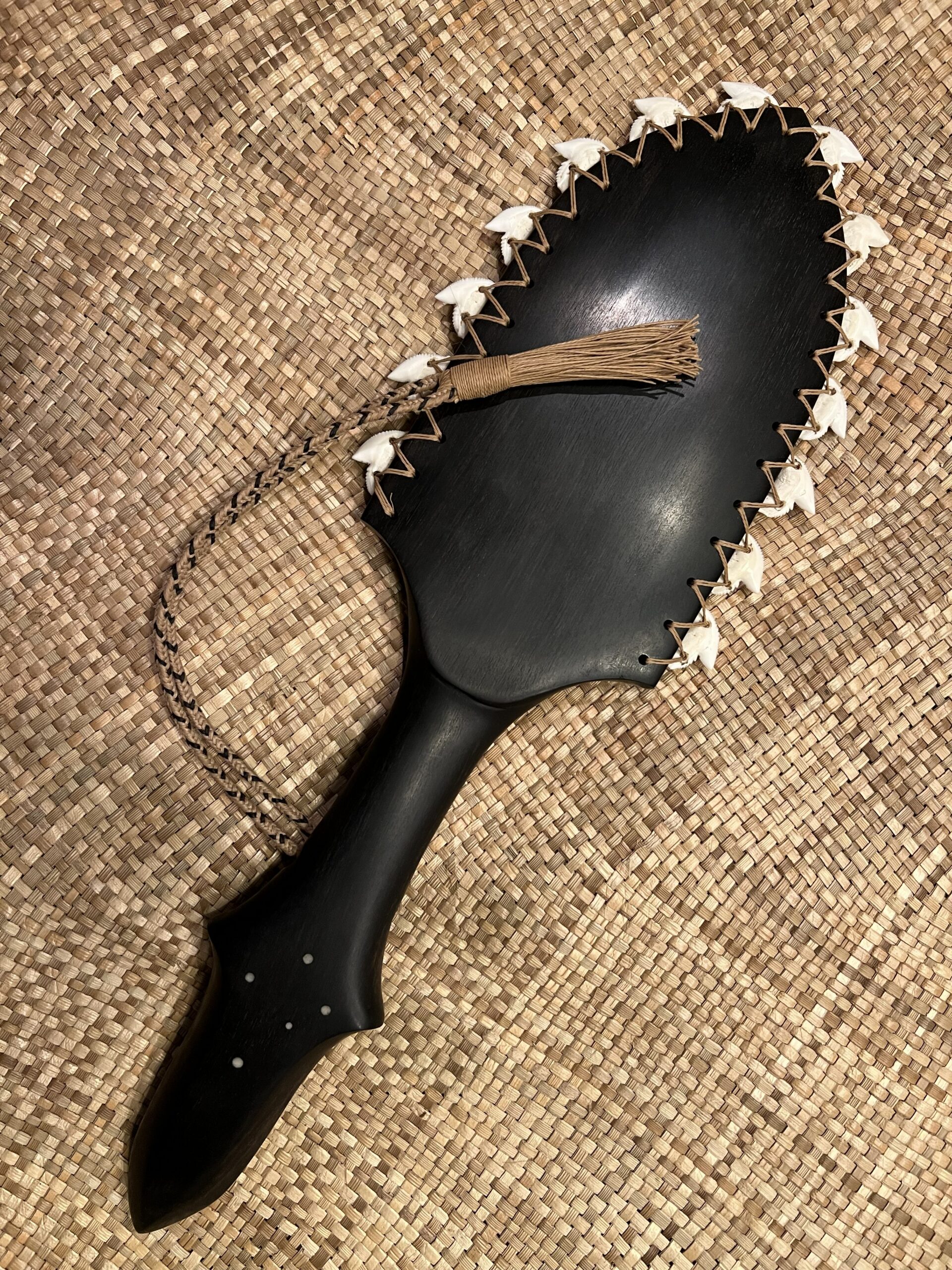
Traditional Hawaiian Tool Making & Material Culture: A focused look at the physical craftsmanship of ancient Hawaiʻi. Kimo demonstrates the creation of traditional implements such as fish hooks, adzes, cutting tools, and chiefly regalia exploring how materials are traditionally gathered and worked. This track can also include a deep dive into his Harvard research regarding the complex revitalization of the chiefly regalia of Samoa and Hawai’i.
Creating with Intention (The Mindset of the Practitioner): In this unique workshop, learners explore the traditional role of a tufuga or kahuna as a creator who works with an exact, dedicated purpose. Kimo guides students through the philosophy of designing and crafting an item with a specific person, community, or function in mind. Students will learn how a practitioner follows protocols to establish the proper headspace to work, gathers raw materials with respect, and imbues every single component of a piece with intentionality. The session covers how meaning (kaona) and purpose are intentionally layered into every step of creation from selecting carving styles, to weaving symbolic patterns into the cordage, and engineering the structural components of the finished piece so that the final work not only operates in its function, but carries with it deep underlying meaning for the individual, community or group.



Malama ‘O Mataitoa, Matanofo, Kimo Watanabe is a cultural practitioner, researcher, and educator dedicated to the preservation and revitalization of Pacific traditions. As the hānai son of Allen Henry Uiha Ai of the storied Lindsey family from the Big Island of Hawai’i. Kimo represents a familial lineage that connects him to prominent, historical chiefly genealogies of Hawai’i island, Maui, and O’ahu and goes back to the storied Maweke from Tahiti. Additionally, he holds Matai Ali’i and Matai Tufuga (Master Practitioner) titles bestowed upon him by the villages of Aua in American Samoa and Sapapali’i in Savai’i Western Samoa.
Kimo’s dedication to this work is deeply personal: he serves the Hawaiian community to honor his late hānai father’s legacy of learning, and he serves the Samoan community to honor his wife and daughters. Driven by a desire to provide his girls, as well as his numerous nieces and nephews with a solid foundation rooted in their heritage, Kimo believes that when we engage in the traditional, physical practices of our ancestors, it can help to build a strong foundation for us to build on.
Blending this profound family accountability with rigorous research, Kimo has collaborated with the Museum’s to help classify Polynesian artifacts and held a fellowship with Harvard University, where he led work associated with the recreation of the first traditional Samoan Ula lei in over 110 years. He has done similar work with Samoan/Fijian Tapua/Tabua, and Hawaiian Lei Niho Palaoa and Lei ‘Opu’u. He has also lent his expertise as a cultural consultant and carver for major film and television productions (including Disney and Apple TV). Through the Living Folk Arts program, Kimo shares these living traditions to inspire a deep respect for ancestral roots, craftsmanship, and community connection.
Offerings to Learners:
Kimo offers highly engaging, hands-on workshops, lecture-demonstrations, and multi-day residencies tailored for K-12 students, universities, and community groups. Each offering is grounded in traditional protocols and can be adapted to fit different age groups and timeframes:
Traditional Hawaiian Tool Making & Material Culture: A focused look at the physical craftsmanship of ancient Hawaiʻi. Kimo demonstrates the creation of traditional implements such as fish hooks, adzes, cutting tools, and chiefly regalia exploring how materials are traditionally gathered and worked. This track can also include a deep dive into his Harvard research regarding the complex revitalization of the chiefly regalia of Samoa and Hawai’i.
Creating with Intention (The Mindset of the Practitioner): In this unique workshop, learners explore the traditional role of a tufuga or kahuna as a creator who works with an exact, dedicated purpose. Kimo guides students through the philosophy of designing and crafting an item with a specific person, community, or function in mind. Students will learn how a practitioner follows protocols to establish the proper headspace to work, gathers raw materials with respect, and imbues every single component of a piece with intentionality. The session covers how meaning (kaona) and purpose are intentionally layered into every step of creation from selecting carving styles, to weaving symbolic patterns into the cordage, and engineering the structural components of the finished piece so that the final work not only operates in its function, but carries with it deep underlying meaning for the individual, community or group.